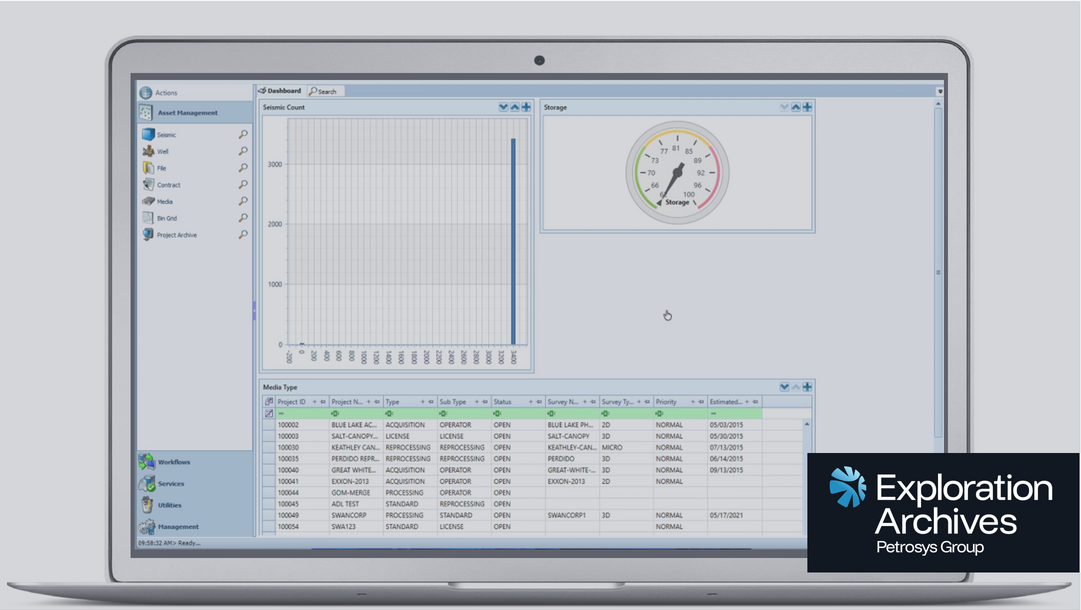
Master the core tools that make seismic data discovery, filtering and visualisation faster, clearer and repeatable.
Understanding seismic workflows in Exploration Archives is essential for teams responsible for locating, organising and reviewing subsurface data. In this on-demand webinar, we walk through the foundational workflows that enable users to confidently search, refine, visualise and structure seismic records within the platform.
Rather than focusing on advanced configuration or system setup, this session concentrates on the day-to-day seismic workflows in Exploration Archives that make the greatest operational impact. You’ll see how users can search by location and date, filter and group results within the grid, explore records spatially using the map, access related information, and save structured screen configurations for repeatable workflows.
When seismic workflows are clearly understood and consistently applied, teams improve speed of discovery, reduce friction in daily tasks, and create greater transparency across projects and disciplines. These core capabilities form the foundation for more advanced governance, cataloguing and archival processes within Exploration Archives.
Whether you are new to the system or reinforcing internal best practice, this webinar provides a clear and practical introduction to seismic workflows in Exploration Archives.
Who This Webinar Is For
This session is relevant for subsurface data managers, seismic data analysts, geoscience support teams, and anyone responsible for locating, reviewing or organising seismic records within Exploration Archives.
Access the On-Demand Webinar
Complete the form below to access the full recording.
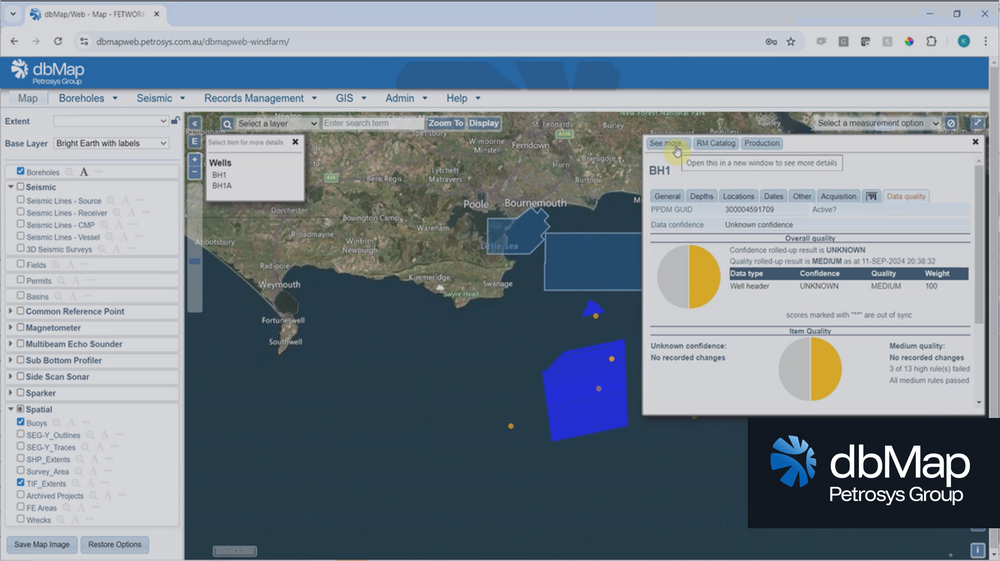
Challenge:
A mid-size operator acquired several offshore assets, inheriting decades of well and seismic data, split across Petrel projects, spreadsheets, network drives, and physical media. Different business units used different naming conventions, coordinate systems, and versions of the same wells.
Teams lacked a single source of truth, slowing subsurface evaluations and delaying integration with corporate systems.
Solution:
dbMap ingested the acquired datasets and aligned them to a PPDM-compliant corporate master, consolidating:
- well headers, directional surveys, logs, tops and cores
- 2D and 3D seismic index information
- leases, permits, basins and fields
- associated unstructured records through Records Management
Automated governance rules flagged mismatches, duplicates and missing metadata. Review workflows enabled data managers to validate updates before promoting them to the corporate master database.
Result: Eliminating Data Conflicts
- A unified subsurface reference dataset used across the organisation
- Faster screening of newly acquired blocks with trusted, consistent data
- Reduced rework as all teams accessed authoritative well and seismic information
- Clear audit history supporting regulatory and stakeholder reporting
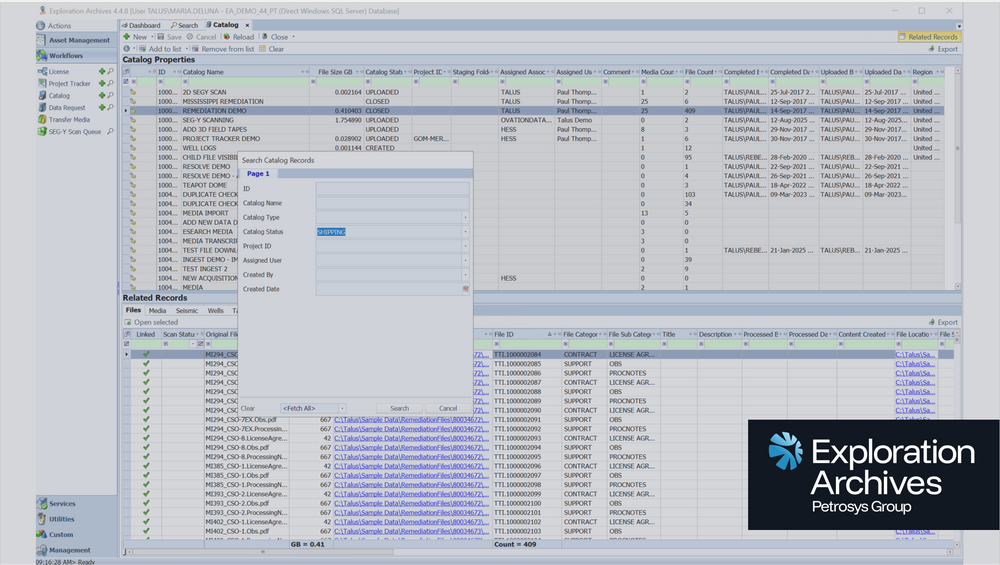
Challenge
Many large operators continue to rely on physical tapes to store decades of legacy seismic media, often in regions considered “low interest” at the time of acquisition. As technology improves, geophysicists revisit these historic datasets to unlock new insight, but without proper governance, locating the correct tapes across hundreds of thousands of media items becomes nearly impossible. Assets may be spread across warehouses, stored off-site, mislabelled, or, in many cases, sitting in forgotten boxes under desks. This leads to months of delay, uncertainty, and the real risk of losing high-value seismic.
Solution
Exploration Archives scans, catalogues, and classifies both physical and digital seismic assets, giving organisations complete visibility of their media estate. Operators can quickly see where legacy tapes are stored, how they are organised, and whether metadata is valid. EA’s workflow and warehouse management tools help teams remediate high-interest areas, correct inaccurate data, and prepare physical media for reprocessing or digitisation. If an area becomes active again, EA provides a governed, repeatable workflow to ensure media is located, validated, and prepared quickly and accurately.
Primary Impact
Operators who previously spent months searching for tapes now locate all required media in minutes. With EA, seismic stored across multiple warehouses, boxes, and legacy systems becomes instantly discoverable and reportable.
Additional Impact
Remediation frequently uncovers previously unrecorded or missing seismic, a multi-million-dollar asset that would have remained lost without proper visibility. EA ensures legacy seismic is no longer a liability, but an asset ready to support new exploration
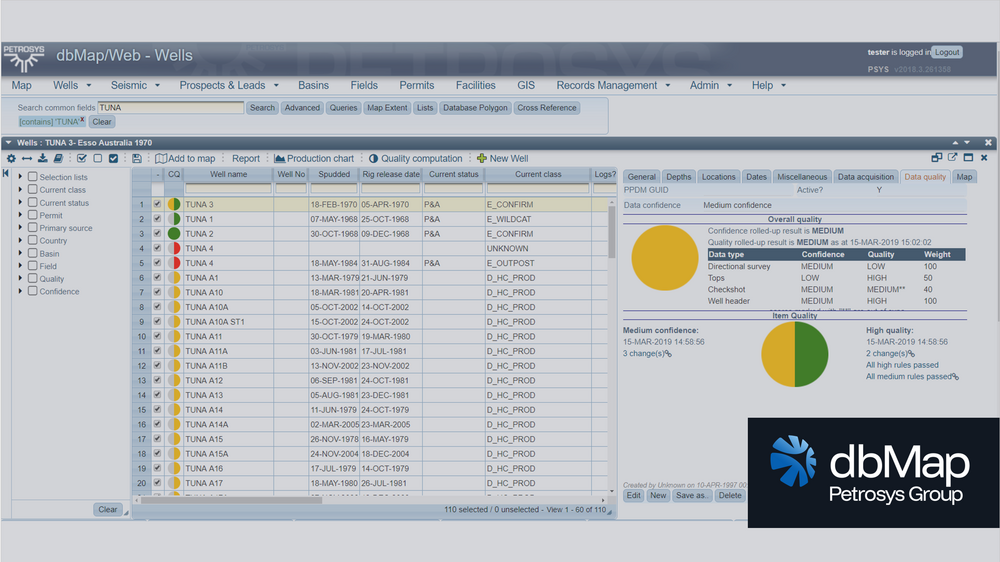
Challenge:
An integrated energy company (oil, gas, geothermal and CCS) struggled with siloed technical data spread across Petrel, Landmark, GIS, SharePoint and various vendor systems.
Different departments stored “their own” version of well and seismic data, making cross-disciplinary workflows inconsistent and exposing the company to regulatory and operational risk.
Solution:
dbMap was deployed as the organisation’s enterprise subsurface master data environment, standardising corporate data governance across all teams.
Using dbMap, they:
- Centralised wells, surveys, tops, logs, cores, 2D/3D seismic and leases
- Harmonised data using PPDM standards
- Implemented version control and audit trails for all updates
- Used Records Management to catalogue associated reports, log scans and physical media
- Connected dbMap to Petrel and Landmark via Exchange for controlled data flow into interpretation environments
Result:
- Consistent, trusted subsurface data feeding every technical workflow
- Data quality improved through controlled promotion workflows and metadata checks
- Faster cross-disciplinary collaboration (geology, geophysics, GIS, subsurface engineering)
- Stronger compliance position with regulators through transparent lineage and auditable processes