New capabilities help seismic processors overcome data challenges, reduce processing time and gain greater confidence in their results.
Every seismic dataset presents its own complexities, from missing traces and unwanted noise to complex near-surface conditions and time-consuming quality control. Seismic processors need flexible, reliable tools that help them address these challenges without slowing down their workflows.
Claritas 2026.2.1 introduces new capabilities and workflow improvements shaped by feedback from seismic processing teams, helping users spend less time overcoming processing challenges and more time evaluating their results.
What’s New for Claritas Users?
Work with challenging seismic data: New trace interpolation and surface-wave attenuation tools help users address gaps in acquisition coverage and reduce unwanted noise.
Spend less time waiting on results: Tomo3D estimation iterations are now 4–10 times faster in tested configurations, allowing users to evaluate near-surface models more efficiently.
Make QC and collaboration easier: Enhanced SeisViewer capabilities simplify seismic comparisons, attribute visualisation and sharing results with colleagues.
Gain greater control over velocity models: The new beta VelocityEditor makes it easier to edit, smooth and compare velocity models.
Driven by Users, Focused on Better Workflows
Alongside the new processing capabilities, Claritas 2026.2.1 delivers improvements to installation, multi-node processing and application reliability, helping users work more efficiently across their seismic processing workflows.
As Petrosys Group becomes part of the unified Ikon Science brand, our commitment to Claritas and its users remains unchanged. We continue to build on its established capabilities, working closely with the seismic processing community to deliver improvements that address real-world challenges.
Discover what’s new in Claritas 2026.2.1
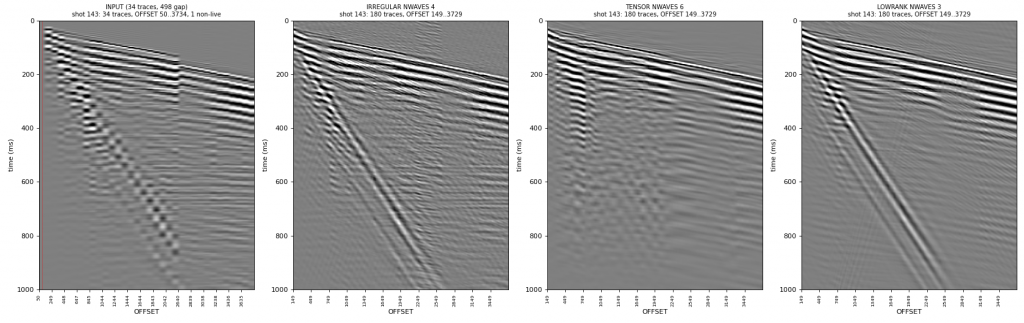
Trace Interpolation (FXINTERP2D)
Comparison of input seismic data with different interpolation approaches, demonstrating how Claritas 2026.2.1 helps reconstruct missing traces, improve seismic event continuity and address gaps in acquisition coverage.
Figure 1 – Trace Interpolation (FXINTERP2D)
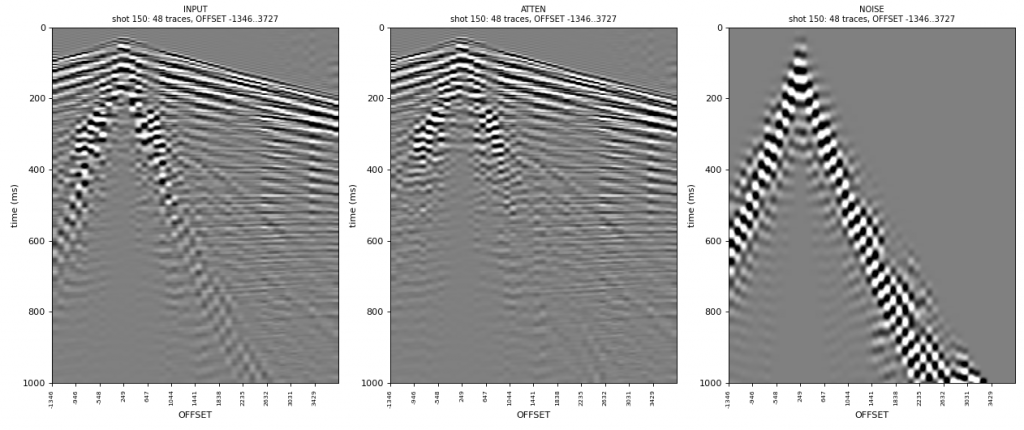
Surface-Wave Attenuation
Before-and-after comparison showing input seismic data, the attenuated result and the separated noise. The new surface-wave attenuation capability helps processors reduce unwanted coherent noise while preserving useful seismic information.
Figure 2 – Surface-Wave Attenuation (SWATTEN)
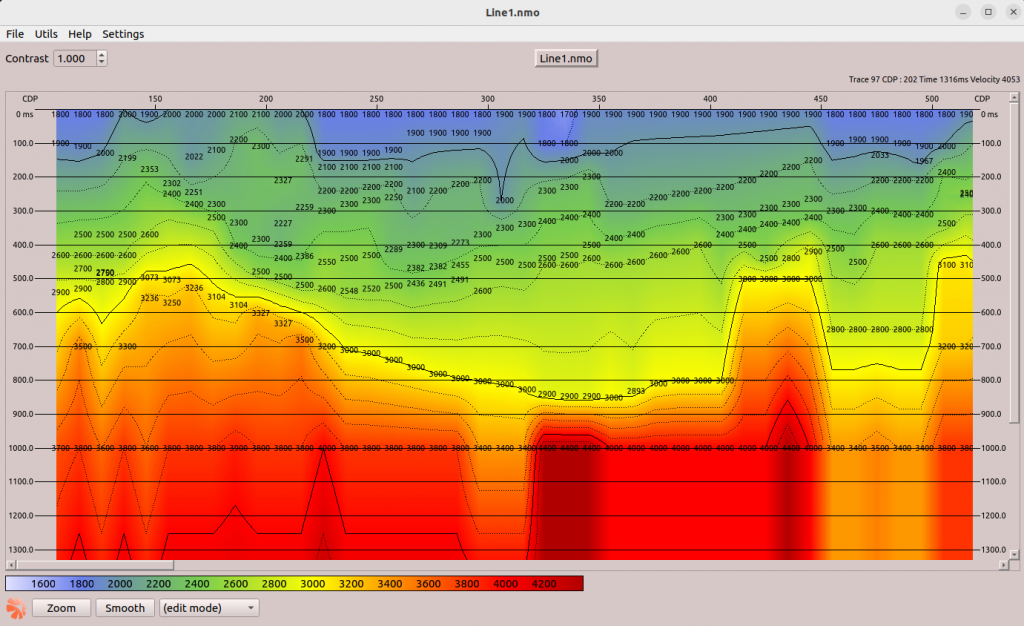
Velocity Model Editing
Visualisation of a 2D velocity model in the new beta VelocityEditor, providing users with greater flexibility to inspect, edit, smooth and refine velocity models as part of their seismic processing workflows.
Figure 3 – Velocity Model Editing (VelocityEditor2D)
Learn More
Existing users can download the release from the Client Portal.
To explore all updates and technical changes included in this release view the full release notes – Claritas V.2026.2.1
If you have questions about the new release or would like to discuss how Claritas fits into your seismic processing workflows, please get in touch.
Ikon Science Unites Petrosys Group and Omnira Software Under the Ikon Science Brand
Houston, TX –August 6, 2026 – Ikon Science today announced that Petrosys Group and Omnira Software have united under the Ikon Science brand, giving customers access to one of the industry’s most comprehensive software portfolios for the upstream energy sector.
Petrosys PRO 2026.2 introduces direct integration with SLB Techlog, expanded support for OpenWorks and Kingdom, and new mapping enhancements that help geoscientists work more efficiently with subsurface data, reduce manual effort, and create clearer, presentation-ready maps.
To provide the best experiences, we use technologies like cookies to store and/or access device information. Consenting to these technologies will allow us to process data such as browsing behavior or unique IDs on this site. Not consenting or withdrawing consent, may adversely affect certain features and functions.
Functional
Always active
The technical storage or access is strictly necessary for the legitimate purpose of enabling the use of a specific service explicitly requested by the subscriber or user, or for the sole purpose of carrying out the transmission of a communication over an electronic communications network.
Preferences
The technical storage or access is necessary for the legitimate purpose of storing preferences that are not requested by the subscriber or user.
Statistics
The technical storage or access that is used exclusively for statistical purposes.The technical storage or access that is used exclusively for anonymous statistical purposes. Without a subpoena, voluntary compliance on the part of your Internet Service Provider, or additional records from a third party, information stored or retrieved for this purpose alone cannot usually be used to identify you.
Marketing
The technical storage or access is required to create user profiles to send advertising, or to track the user on a website or across several websites for similar marketing purposes.