Understand the subsurface data lifecycle and why trusted, accessible data is essential for modern subsurface workflows.

There’s a common assumption in seismic processing. That better results come from more advanced algorithms, more compute, and more complex workflows.
On the surface, it makes sense.
Processing technology has advanced significantly over the years. High-end imaging techniques like full waveform inversion (FWI) and least-squares migration have pushed the boundaries of what’s possible.
But here’s the question that often gets overlooked:
Do more advanced seismic processing workflows always deliver more value?
In many organisations, seismic processing workflows have evolved around what is technically possible. If the tools are available and the compute is there, the tendency is to use them – whether the data is ready or not.
Run the full workflow. Push for the highest resolution. Aim for the best possible image. And in some cases, that’s absolutely the right decision. But not always.
Because seismic processing doesn’t exist in isolation. It sits within a much broader workflow, one that includes acquisition, interpretation, data management, and ultimately, decision-making.
And that changes what “better” really means.
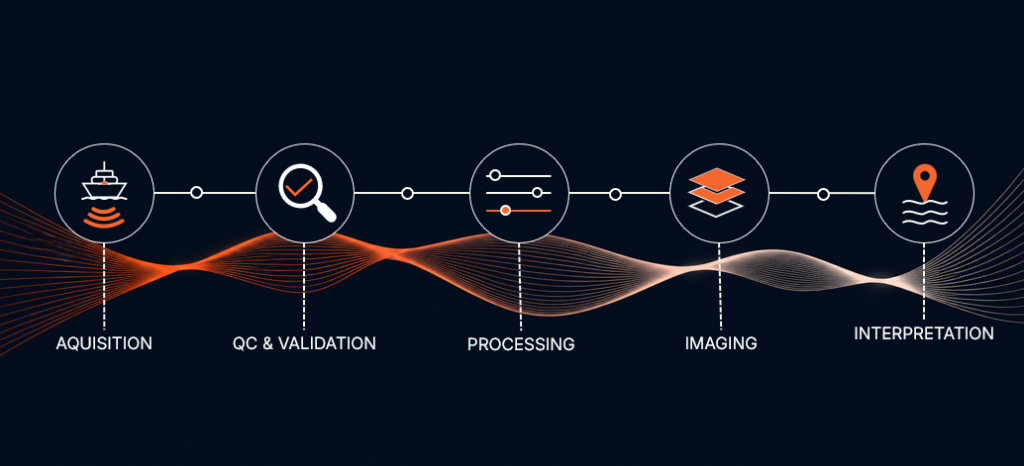 Figure 1: Seismic processing forms part of a wider workflow, with each stage contributing to the quality of decisions and project outcomes.
Not all datasets are equal.
Some are complex, high-value assets where advanced imaging is essential. Others are smaller, noisier, or constrained by time, budget, or operational realities.
Yet processing decisions are often made before the value of additional complexity has been fully established.
This is where the gap starts to appear.
Because the goal isn’t simply to produce the best image possible. It’s to produce the right outcome for the project.
 One of the less talked about aspects of seismic processing is where value is actually generated. It’s easy to assume it happens at the end – when the final image is delivered.
But in practice, many of the decisions that reduce risk and improve project outcomes are made much earlier, well before the final image is delivered.
These are the points where risk is reduced.
And once those decisions are made, the role of advanced processing becomes clearer and more targeted.
This isn’t about reducing the importance of high-end processing. Far from it.
Advanced imaging plays a critical role in many projects, particularly in complex geological settings. But it’s most effective when it’s applied at the right stage, for the right reasons.
The challenge is that workflows don’t always reflect that reality.
Instead of asking: “What is the most advanced processing we can run?”
There’s value in asking: “Where in this workflow will processing have the greatest impact?”
As processing technology continues to evolve, the differentiator is no longer just capability.
Advanced processing techniques are becoming increasingly accessible across the industry. So the question shifts.
From: What can we do?
To: What should we do – and when?
Because ultimately, the best processing workflow isn’t the most advanced. It’s the one that delivers value at the right stage.
For many teams, this leads to a more balanced approach:
It’s a subtle shift. But an important one. Because the question isn’t whether advanced processing has value. Clearly, it does. The question is where that value is created.
In many cases, the greatest impact comes not from applying the most sophisticated algorithm as early as possible, but from understanding the data, reducing uncertainty, and making better decisions throughout the workflow.
Advanced processing remains an essential part of the toolkit. But the most effective workflows aren’t defined by their complexity.
They’re defined by their ability to deliver the right information, at the right time, to support better outcomes.
Because seismic processing isn’t a single step. It’s part of a much larger system.
Understanding the workflow is only the beginning. Delivering better project outcomes depends on making informed processing decisions, reducing uncertainty early, and applying advanced techniques where they add genuine value.
Explore how Claritas helps organisations maximise the value of their seismic processing workflows.
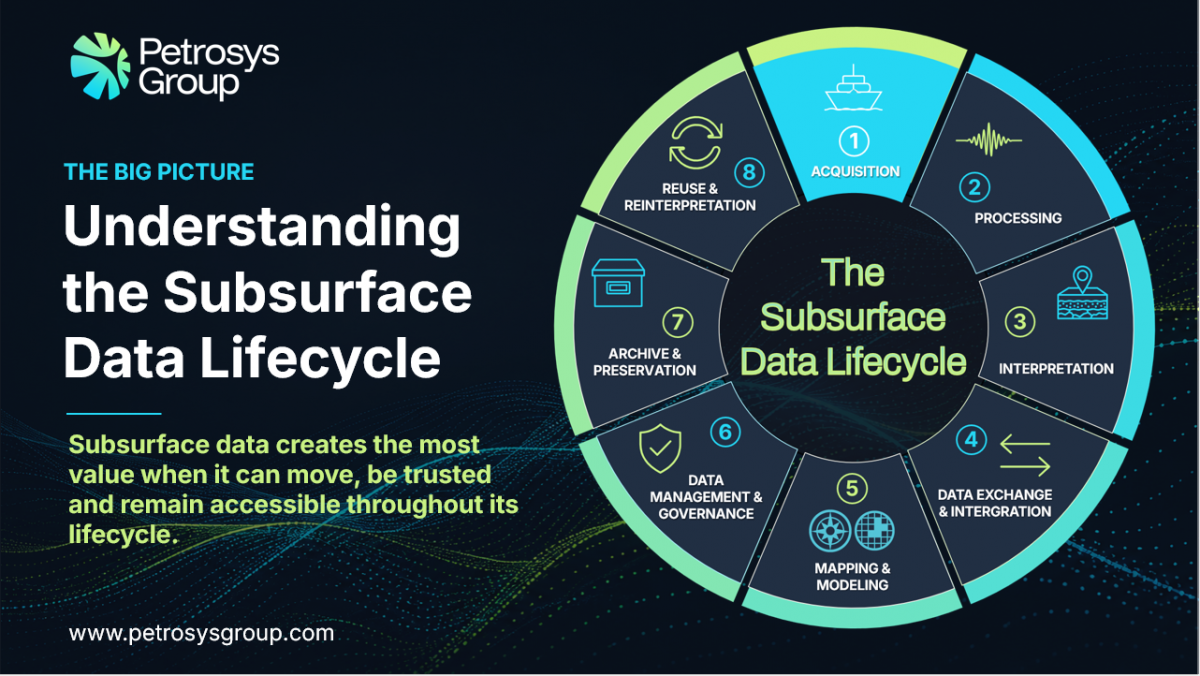
Understand the subsurface data lifecycle and why trusted, accessible data is essential for modern subsurface workflows.
Preparing a UK NDR submission involves more than transferring files. From seismic format compliance to metadata validation, we outline the key challenges companies face and the structured workflow required to...