Need to report area, length or filtered totals from GIS shapes in PRO? The Shape Summary tool in PRO v.2026.1.1 makes it easy to generate accurate statistics directly within your...

Preparing a UK NDR submission involves more than transferring files. From seismic format compliance to metadata validation, we outline the key challenges companies face and the structured workflow required to meet National Data Repository requirements.
In the UK, the National Data Repository (NDR) is administered by the North Sea Transition Authority (formerly the Oil and Gas Authority). The NDR regulates the submission of upstream oil and gas data and plays a central role in preserving and providing access to the UK’s subsurface information.
Submission of data to the NDR is mandatory for companies holding certain types of licences, including:
The data submitted to the NDR supports exploration and development activities, informs government policy, and provides controlled access to industry stakeholders, researchers and the public.
Companies preparing UK NDR submissions must adhere to strict technical standards relating to data format, quality and metadata. While guidance is provided, preparing compliant data for submission can present several challenges.
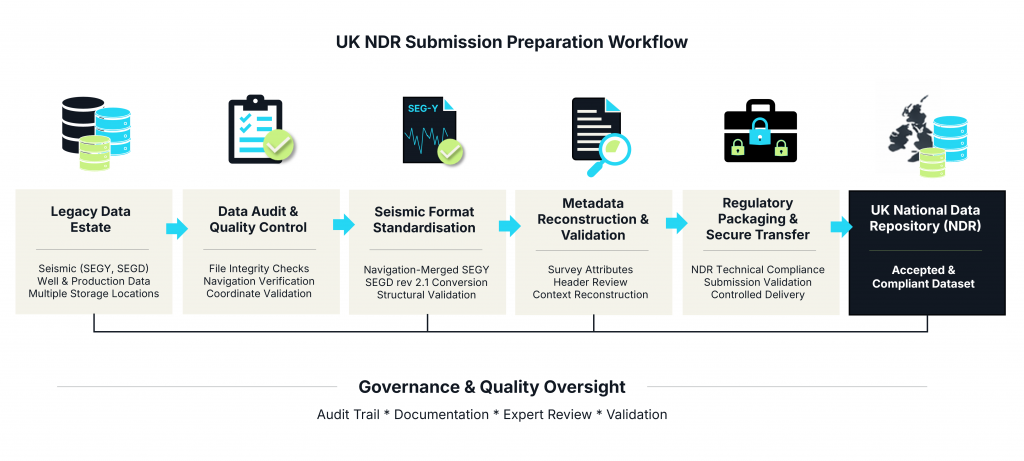
One of the main challenges in NDR submissions is ensuring that the data being submitted is accurate and of high quality. This requires careful attention to data collection, processing and analysis, as well as adherence to NDR technical standards and formatting requirements.
Many organisations store data across multiple systems and in different formats. Integrating this information for NDR submissions can require significant effort to extract, transform and load data into formats compatible with NDR submission requirements.
Metadata is essential for NDR submissions because it provides context and meaning to the data being submitted. Creating comprehensive and accurate metadata can be time-consuming and requires both domain knowledge and careful validation to ensure consistency.
Companies must comply with regulatory requirements when preparing NDR submissions, including technical standards, formatting specifications and submission timelines. Failure to comply may result in delays or regulatory consequences.
Organisations must ensure that data being submitted to the NDR is secure and protected from unauthorised access or disclosure. This may involve encryption, secure file transfer protocols and controlled handling procedures.
Limited staff, budget constraints and competing operational priorities can make it difficult to prepare and complete an NDR submissions in a timely manner. Effective planning and resource allocation are essential.
Interica DataCentre, has a successful track record of delivering NDR submission projects for oil and gas companies.
We support clients in overcoming common NDR submission challenges, including:
By combining technical expertise with structured quality control, we help organisations complete UK NDR submissions with confidence. Get in touch to talk to our team.
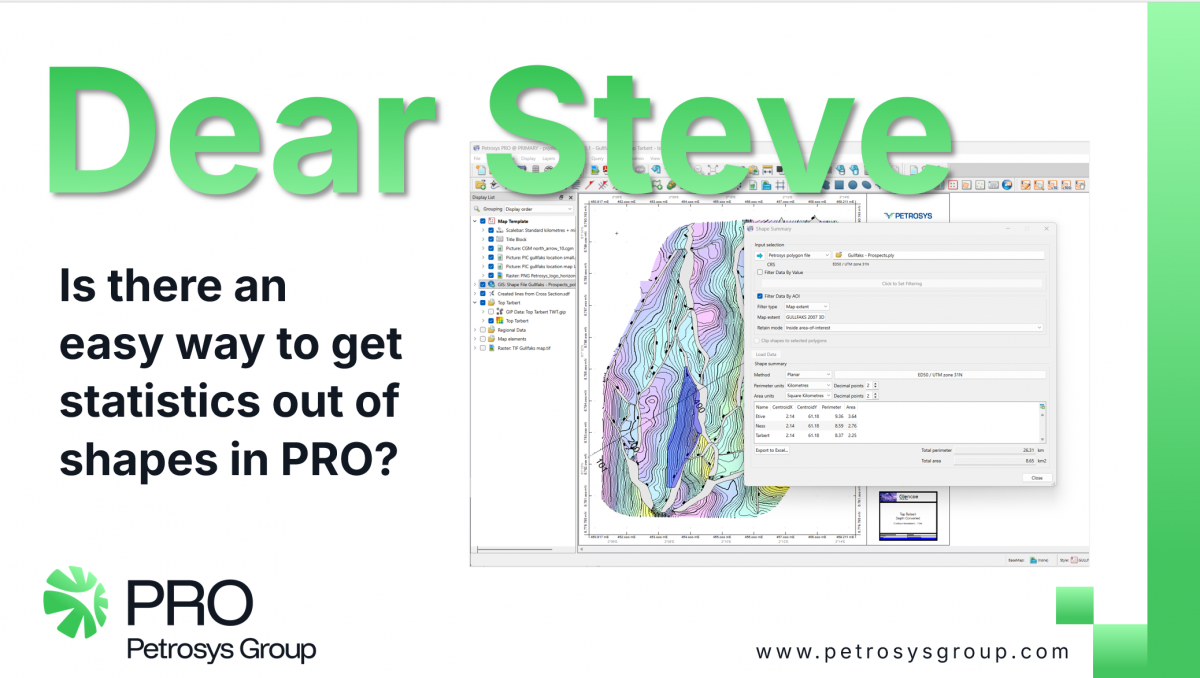
Need to report area, length or filtered totals from GIS shapes in PRO? The Shape Summary tool in PRO v.2026.1.1 makes it easy to generate accurate statistics directly within your...